• Skip to primary navigation
  • Skip to main content
  • Skip to primary sidebar
  • Skip to footer
  • Home
  • The words
  • The writer
  • The work

Beauty on the Backroads

Stories of grace for life's unexpected turns

Home

Why we took our kids to a funeral

March 24, 2014

I was a teenager the first time I saw a body lying in a casket.

My grandma’s second husband, a man not related to me by blood but who had become like a grandfather to me, had died and we were at his funeral, the first one I remember attending.

I couldn’t look at the body. It weirded me out to see the shell of a person I’d last seen alive looking like he was sleeping. I half-feared he would open his eyes and sit up. Looking at him felt like an intrusion of privacy. The world spun a little and I had to leave the viewing area.

Up to that point, I hadn’t known a lot of people who had died. A great-grandmother I knew a little had died a few years earlier but I didn’t go to her funeral.

In the last 20 years, I still don’t know a lot of people who have died, but I’ve attended more than a few funerals.

Last week, my husband and I took our kids to one.

—

To me, he was a kind, old man at church. He didn’t say much. I’m not sure he heard much either. My husband had more contact with him. I knew his wife a little better. Though they were members of a church we no longer attend, going to the funeral seemed like the right thing to do.

There, I learned about his sense of humor. About mystery trips he would plan for his family. How he loved flowers and gardening and making yard ornaments. I thought he was just a barber.

Funerals fill me with regret.

In my 20s, an elderly neighbor I’d known my whole life died. She was a sweet woman who always had a kind word for my brother and me. She’d been a widow as long as I’d known her. I rarely thought of her as anything else. At her funeral I learned of her vibrant Christian faith. I had recently become a Christian. I wish I could have visited her and talked about her life and faith.

The stories she could have told me. Gone forever.

I’m driven by a passion for these untold stories, the seemingly ordinary lives of those who walk among us. I wish I could tell them all before it’s too late.

—

Whatever my lot, thou has taught me to say

it is well, it is well with my soul

The man’s family ended the funeral with this hymn, a tear-inducing testimony of faith. It wasn’t the first time I’d heard this song at a funeral.

A decade ago, I was a newspaper reporter, taking my turn on weekend rotation, which meant a visit to the county jail to check arrest reports for publication in the next day’s edition. It was a task I’d done before, not one I’d enjoyed, but I was comfortable enough being buzzed into the facility and hearing the door click behind me while I copied information off the reports.

This day was different, though. An officer met me at the door and assumed I was there to collect information on a tragedy I knew nothing about. He handed me a press release about a family of four who had driven off the road near the river and drowned in their van. I spent the rest of the night making calls, seeking information and photos of the family. It’s a story I’ll never forget, and I’m sure I didn’t do it justice.

Later that week, I attended the funeral. No one told me I couldn’t be there, but I still felt like an intruder. I sat in the balcony. I took notes on the service. Our photographer took photos before being asked to leave. I was certain I would be the next one escorted out. I listened to family members talk about the faith and togetherness of the four who died. I watched as four coffins left the church in multiple hearses.

And I remember the words from the hymn and how a grieving family in the midst of an unimaginable tragedy sang those words and meant it.

It is well with my soul.

—

This is what I want my kids to know about death.

Photo courtesy of sxc.hu

Photo courtesy of sxc.hu

That it is a part of life. That joy and faith can exist in times of grief. That life in these bodies does not go on forever. That there is hope beyond the grave.

We’ve taken them to weddings, baptisms and infant dedications, all sacred moments in the family of God. So, too, a funeral.

They didn’t view the body, but we talked about death.

In the bathroom of the funeral home, our 4-year-old son, the thinker, talked about the man who’d died. He calls him “the dad who gave us the bunk beds” because that’s how our kids knew him.

“Yeah, he died,” Corban said.

“Yes,” I replied. “And he’s with Jesus now.”

“And someday we’ll be with Jesus,” he observed.

“Yes,” I agreed.

“How do you get to Jesus? I wonder how you get to him.”

While that might seem like a theological question requiring an “ask Jesus into your heart” kind of answer, I think my son was thinking about the mechanics of the process. Like could a person take a highway to heaven or fly in a plane?

I simply answered, “It’s a bit of a mystery, isn’t it?”

He seemed satisfied.

Since my husband’s uncle died a few months ago, we’ve talked to our kids about death. Because we want them to know why people they’re used to seeing aren’t around anymore. The conversations got a little morbid for a while. They would say things like “We’re all going to die someday,” and my husband and I would cringe when they’d ask specifically about family members who were someday going to die.

It’s an uncomfortable topic, for sure, but I want my kids to be comfortable with death. Not morbidly fascinated or afraid but informed and hopeful.

Death is a part of life and it’s part of God’s story in this world.

They will read the Bible someday and read about death. They will someday learn that some deaths are more tragic and unexpected than others. They will attend funerals of family members, maybe even friends. They will know that there are limits to our life in a human body but that God promises eternal life that can’t fully be comprehended now. I want them to know that death is not the end; it’s a door.

We won’t have those discussions all at once. They’re only 4 and 6, after all. But we’ll take their questions as they come and continue to include them in the life–and death–of the family of God.

How have you handled this topic in your family?

When did you begin talking to your kids about death?

What advice can you give from your experiences?

Filed Under: Children & motherhood, faith & spirituality Tagged With: death, eternal life, funerals, hope, it is well with my soul, taking kids to a funeral, talking to kids about death, what happens when you die

What women want from the church: Sisters

March 20, 2014

I came to church in search of sisters, although I didn’t know it then.

Having grown up with family but not in the church, I was often jealous, in my early saved days, of people whose homes were, and always had been, Christian. Not only were they blood relatives but spiritual ones.

I yearned for connection. I loved my biological family. But I needed a spiritual one as well.

—-

We were four peas in a pod, my best friends in high school. We met in a gym class our freshman year, and in the years that followed we were inseparable. We watched Disney movies at sleepovers while our classmates partied on the weekends. We ate lunch together and welcomed the outcasts to our table. We arranged our schedules so we would share some classes throughout the day. We passed notes in the hallway and defended each other.

It was my first experience with sisterhood.

Read the rest on Preston Yancey’s blog here, part of a series, What Women Want from the Church, posting on Thursdays.

Filed Under: faith & spirituality, Friendship, women Tagged With: friends, guest posts, preston yancey, sisterhood, what women want from the church

How I learned to love pirate stories: Review of The Ransom by MaryLu Tyndall

March 19, 2014

Secrets. And surprises.

Those two words sum up everything I love about MaryLu Tyndall’s new release, The Ransom, the fourth in her Legacy of the King’s Pirates series. (Disclaimer: I was given a free e-copy of the book by the author in exchange for my review.)

ransomSet in the Caribbean–Port Royal, Jamaica–in the late 17th Century, The Ransom is a story of identities and the roles we play to survive in whatever society we find ourselves in.

After the death of her mother, Juliana Dutton is left to run her family’s shipping business when her father becomes ill and her brother turns to gambling and drinking. With the help of the family’s butler, she’s got the town convinced all is well with the business. For now.

Alexander Hyde, on the other hand, has the town convinced he’s the dandy Lord Munthrope while he lives a pirate’s life by night. The son of the infamous Captain Merrick Hyde has turned his back on his parents’ faith as he seeks a release from others’ expectations for his life.

But when Lord Munthrope offers Juliana a pact that could help them both, their carefully constructed schemes begin to unravel as they discover who they truly are meant to be.

The Ransom is a fun tale laced with adventure and romance, bringing to mind the antics of Westley in The Princess Bride or any of the Johnny Depp Pirates of the Caribbean movies, all of which I now want to watch again.

When I first started reading Tyndall’s books just over a year ago, her seafaring adventures intrigued me because I hadn’t read anything like that in inspirational fiction. But I convinced myself that I wasn’t really all that into pirates. After much consideration, and plenty of reading, I can safely say that has all changed. I’m firmly rooted in the pirate camp, and what I love about Tyndall’s stories, including this one, are the elements of faith worked in. Everyone is struggling with their beliefs and has made mistakes they regret. But none are exempt from redemption.

Though technically book four in the series, The Ransom can be read as a standalone novel. But trust me when I say you’ll also want to read the other books in the series: The Redemption, The Reliance and The Restitution.


Filed Under: Fiction, The Weekly Read Tagged With: inspirational fiction, legacy of the king's pirates, marylu tyndall, pirate adventures, pirates of the caribbean, port royal jamaica, The Princess Bride

Why it's been a little quiet around here

March 17, 2014

Twice in the last two days, I’ve been the recipient of quiet time. As I write, my husband has whisked the children away to the barbershop (for him) so I can have some quiet in the house time before the dinner/homework/bath/bed routine sucks the life out of me. This quiet solitude is usually a luxury, though I had a few blessed hours to myself yesterday as well, also unexpected. (And I wrote almost 1,500 words on my novel and maybe, just maybe, can see the faintest glimpse of the end!)

Quiet is something I crave but not often something I get.

And the last few weeks have been more full than normal. Which is why I’ve been a little more quiet on the blog than I intended.

But I realized that I left you with this look at my sometimes messy world with no follow-up, and I didn’t want to cause any alarm. Later that week, I came down with a sinus/head cold thing that put me behind in preparing for house guests and a six-year-old’s birthday party. Understandably, the blog slipped off the “to do” list.

I never stopped blogging in my head, though. I probably “wrote” a dozen posts while going through my daily life duties, and none of those will see the light of day. Maybe, though, I have a few spare thoughts to share. I realize it’s okay to disappear for a while, but writing (and blogging) are life-giving to me, and I’ve missed the chance to regularly share what’s in my head.

—

So, the girl turned 6, and the celebration lasted a week, and I can still remember her entrance into the world and the countless ways she changed us forever. To see her now, at 6, in all her emotions and feelings and zest for life, I’m reminded how quickly the days and years pass and how much of what we see in her now is what we will see in her years from now. Oh, how I dream about the ways God will use her unique (and utterly foreign to me) personality.

And speaking of personalities, I took a personality test for the first official time. It’s part of a leadership development small group at our church, and though I suspected certain things about the way I operate in the world, the test and its results were eye-opening. Shocking, really. Not because they didn’t make sense but because they did. Knowing my natural inclinations when it comes to living in the world helps me not to feel bad that I’m not like other people and makes me aware of areas where I can stretch myself a little more. (Oh, and if you’re into that sort of thing, I’m an INFJ.)

—

It snowed today. And I’m ready for spring. This is our first spring in this house, so it’s been a fun game to see where the flowers are going to come up. The kids skip around the house and yell excitedly when they spot a new bud or bloom. I’ve never been terribly “green” when it comes to plants and gardening, but I want my kids to love the outdoors and nature and to know how to take care of it. So, this year, we’re going to start small and try a few things.

—

A bunch of balloons landed in our driveway today. And when I say a bunch, think grapes on a vine. The purple-blue-green bundle blew into our yard and settled next to our neighbor’s porch. I looked out the window and exclaimed to our son, “Corban, what is that?” My husband rescued the balloons and brought them inside. (I really hope they weren’t on their way to a birthday party. We live on a busy street and would have no idea how to track down the owner.) Sometimes joy is like this. An unexpected burst of color and fun in the midst of your ordinary day. I want to be this for people and look for this in my day.

—

For every birthday my kids have had so far, I’ve made them a cake according to the theme they request. Some years have turned out better than others. This year, she wanted an Ariel cake. I’ve already done the doll with a bowl cake skirt so I wanted to do something different. I wandered the craft stores looking for inspiration (after spending significant time on Pinterest) and this was the result.

Izzy cake 6th

I frequently tell people I’m not crafty because I have not a lot of patience for kids’ rainbow looms and Pinteresty things that look fun but would probably drive me crazy. But wandering through an arts and crafts store revived my creativity. I could almost feel the possibilities in there. Everything in there has the potential to become something beautiful, and no two people would create the exact same thing, even if they had identical supplies.

When I’m feeling stuck in my writing or maybe even just a little hopeless about life, I think I’ll wander the arts and crafts aisles, even if I don’t intend to buy anything.

So, what have you been up to?

Filed Under: arts and crafts, Children & motherhood, faith & spirituality Tagged With: arts and crafts, balloons, birthday party, busy life, house guests, quiet, shopping, solitude, spring, unexpected joy

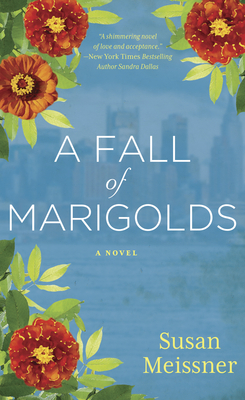
Why I don't usually read this kind of book (but I'm not sorry I did): Review of A Fall of Marigolds by Susan Meissner

March 12, 2014

Reading a book by Susan Meissner is like treating yourself to fine chocolate. Her last work was a masterpiece that left me aching to return to Italy. She is a masterful storyteller.

So, when I knew she had a new book releasing, I didn’t hesitate to enter a Goodreads giveaway for a copy, even though I knew next to nothing about the story. And I won!

fall of marigolds A Fall of Marigolds has been sitting on my shelf for a few months while I tackled other reviews, but I recently finished it and can easily say this book makes my top whatever list of best books I’ve ever read.

The book opens in Manhattan 2011 with Taryn, a woman whose husband died in the Twin Towers on 9/11. She works in a specialty fabric store and lives above it with her 9-year-old daughter. A picture of her from the day of the tragedy surfaces suddenly and the quiet life she thought she’d gotten on with is disturbed.

Intertwined with her story is that of Clara, a nurse working on Ellis Island in 1911. She was a witness to the Triangle Shirtwaist Factory fire and has come to the island to escape the memories of her loss that day.

Both stories are steeped in heavy sadness, and honestly, I’ve been avoiding stories, documentaries and movies about 9/11 since the day it happened because I can sometimes still feel the weight of the national despair. I don’t often lean in to pain, and I might have been more hesitant to read this story if I’d known that was part of it.

And I won’t lie. This story is not all feel-good. There are heart-wrenching scenes as these two women, separated by a century of time, allow themselves to grieve the past and open their lives to the present and future. I had to set it down a few times and let the feelings sink in and pass before starting again.

The beauty of this story, though, is the thread of hope woven through the tragedies. Meissner does not avoid the reality of how these women were affected nor does she let them stay in their comfortable grief. When the story was finished, I felt full in my soul. I may have even released a satisfied sigh. This is one of those books that is not so much an escape as it is examination, helping readers to see that whatever hardship seems to be at the forefront, a larger, stronger force is at work.

After reading A Fall of Marigolds, I feel ready to explore other 9/11 literature, and I’d certainly read this book again.

Filed Under: Fiction, The Weekly Read Tagged With: 9/11 stories, a fall of marigolds, goodreads giveaway, grief, penguin group, susan meissner

The one time I went to prison

March 6, 2014

On the outskirts of my hometown, on 400 acres of land sets an imposing building surrounded by barbed wire fencing.

It’s the largest medium security prison in Illinois, housing more than 2,000 adult men. It opened five years after I was born, so I can’t remember ever not knowing about it. It’s out of the way of regular traffic patterns, so if you don’t want to drive by it, you don’t have to. I’ve always thought it odd that the country club is on the same road, not even a mile away. Could two worlds be more different and yet so close in proximity?

Also not far from the prison is a neighborhood of low-income housing, built for the families who move to the area to be near their incarcerated loved ones.

The Dixon Correctional Center is on some of the most beautiful property in the county. A wooded bike path passes the backside of the property. Years ago, before it was a prison, it was a colony for epileptics, then an institution for the mentally ill and a school for people with developmental disabilities. I don’t know as much about its history as I’d like to, and I’ve maybe even gotten it wrong now. But I know that I feel sad and hopeless when I look at the building.

And I’m just on the outside.

—

“Want to go to prison with me?”

The man who asked was a friend and mentor, a Bible study leader who spent at least one Saturday a month teaching a Bible study in the prison. It was one of his favorite things to do, and he wanted me to go with him.

No.Yes.NO.Whynot?Okay.

That was what happened in my mind. I was working as a journalist and I almost never passed up an opportunity to do something I’d never done before. But go to prison? I didn’t know if I could do it, even if my friend was going to be there the whole time.

We met in the parking lot. I almost wet my pants just driving onto the property, certain that I’d mess something up and find myself in some kind of trouble. Because I was a good girl. I avoided trouble like contagious disease. I’d never even had a speeding ticket. The one time I’d had to go to detention in elementary school, I was physically sick about it.

Because I could do no wrong. So I thought.

But there I was. Entering a prison. Metal detector, pat down and all.

I was nervously excited. Maybe a little scared.

All these years later, I barely remember that day. But I know the fear faded. I was welcomed by the men who came for Bible study. They were genuinely glad to meet me and to see my friend. They had wisdom and experience to share. They were people. People who had made mistakes and were paying for those mistakes but people nonetheless.

Reading this book reminded me of that experience and reignited something in me. Something I’m still trying to identify.

—

Our church is partnering with another church during Lent to focus on injustice in the prison system. You can find out more here. I read the compact yesterday and the first day’s devotional, and I’m appalled at my ignorance. I have little firsthand knowledge of the injustice in the justice system. I know it’s not a perfect system, but there’s more to it than that.

What I appreciate about this Lenten compact is the emphasis on restorative justice, or giving convicted felons another chance at life outside of prison. It’s no easy road, from what I’ve read. In the book I referenced earlier, the author learned that women released from prison in Alabama are given $10, a polo shirt and pants, and a bus ticket back to the place where they committed the crime. And with that, they’re supposed to make a fresh start. Think even of movies like Les Miserables and The Shawshank Redemption. Those aren’t just stories. There’s truth in them.

That prison I mentioned earlier in my hometown? According to the Illinois Department of Corrections, it costs almost $24,000 a year on average per inmate to house them. To me, that ought to be serious motivation to examine how we rehabilitate, who we sentence and what happens when they leave prison. I absolutely understand it’s a complicated issue full of challenges I can’t even imagine.

But, can we do better?

—

Lent is a season of fasting and preparation for the death and resurrection of Jesus, who came to free us from the chains of death and sin.

Because we are all in prisons, some of them self-imposed, and He offers freedom to us all.

The Lenten Compact begins with readings in the psalms regarding confession of sin and appealing to God’s mercy.

Because we are sinners. And He is merciful.

And we who have been shown mercy are to show mercy.

I confess: this Lenten Compact made me uncomfortable at first. I already felt unprepared for Lent this year, like I hadn’t given it much thought, but maybe that’s okay. Maybe all I need to do is show up and let God lead me through the season, then take appropriate action. I have no idea what that will look like.

But I’ve already been to prison once, so who’s to say it won’t happen again?

Filed Under: faith & spirituality, holidays, missions Tagged With: brenda spahn, Dixon Correctional Center, injustice, Lent, Lenten Compact, Les Miserable, Miss Brenda and the Loveladies, prison ministry, the Lovelady Center, The Shawshank Redemption

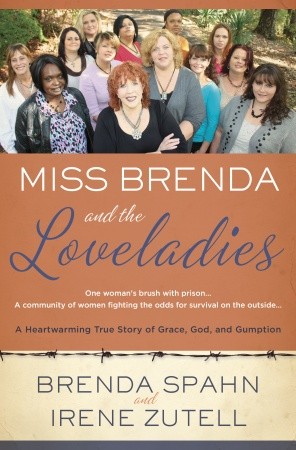
What happens when a crazy woman gets her way: Review of Miss Brenda and the Loveladies by Brenda Spahn and Irene Zutell

March 5, 2014

Brenda Spahn was so eager to share hope with women inmates she once broke into a prison.

Sound crazy?

It was. But it’s not even half the story of how a successful businesswoman in Alabama redirected her passion for making money to rehabilitating broken lives.

miss brendaMiss Brenda and the Loveladies is the story of how it all started. (Disclaimer: I received a free copy of the book from Waterbrook Multnomah Publishers through the Blogging for Books program  in exchange for my review.)

Brenda Spahn has spunk, and she won’t take no for an answer, even when she has no idea what she’s getting herself into. When her tax preparation business came under scrutiny for some alleged improper practices, Brenda and her daughter, an employee of the company, faced possible jail time if found guilty. When they were spared serving even a brief sentence, Brenda realized she wanted to minister to women in prison because she could have been one.

The road was rocky at first, and she admits she was in over her head. She wanted to share a message of hope and thought she could just walk into a prison and do that. Eventually, seeing the need for a place for recently released women to turn their lives around, Brenda opened her lavish home to seven female ex-cons from the roughest women’s prison in the country.

Everyone expected her to fail: the state, her family, the women themselves. But Brenda didn’t give up, even at personal cost to herself and her family. She now runs the largest transitional center for women in the country.

Her story is eye-opening and sad. I cried reading about how prisoners are treated in the Julia Tutwiler Prison for Women. Their humanity and dignity are stripped from them, and they are often given no hope to ever change. Brenda challenged that idea and opened what she called a “whole-way” house, as opposed to a halfway house, to aid their restoration.

It’s also funny and inspiring. I laughed picturing some of the ridiculous situations Brenda and the women often found themselves in, and I cheered for victory over each obstacle Brenda faced.

This is a book that will challenge readers to reform their own way of thinking, especially when it comes to the idea of God changing hearts. The work Brenda is doing is proof that He can restore and redeem even the worst of life’s trials. It was a reminder to me of the very real horrors people face and that even those who have committed crimes are people with hurts and hopes.

Brenda describes her own change of attitude this way:

Hearing their stories changed me. Yes, most of them had done bad things. But, oh my, most of them never had a fighting chance. … Truth was, I believed that these women had deserved what they were getting. Now I knew their stories. What so many of them “got” was not anything anyone should ever get … They were survivors, and many were trying to live on, even though they barely had a chance. (32)

The stories told are gritty and raw at times, including “colorful” language. I appreciated that it was left in for the tone and topic of this book. Though that may bother some people, I think it’s appropriate for accuracy and reality.

I’m not sure I could do what Miss Brenda did, but man, am I challenged to live the Gospel in a radical way. Almost no one thought her idea was any good, and now the good she has done is immeasurable.

Click here to find out more about The Lovelady Center and the work they do. And you can read the authors’ bios here.

Filed Under: missions, Non-fiction, The Weekly Read Tagged With: blogging for books, brenda spahn, julia tutwiler prison, lovelady center, prison ministry, prison reform, rehabilitation, transitional center, waterbrook multnomah

When I let you enter my mess

March 3, 2014

I crawled back under the covers as the first of a waterfall of tears spilled out of my eyes and onto my face. I had woken up several hours earlier unready, unwilling, to face the day, but the kids were awake and moving throughout the house and sometimes they just need a little supervision to keep the fighting at bay, so I had gotten out of bed, made coffee, eaten breakfast and now here I was back in bed before it was time to walk to the bus stop.

The night before, I’d cried a bucket of tears, releasing all the feelings I’d invited to a party I didn’t know I was hosting. For several days, I’d felt everything, or close to everything, a person can feel: anxious, afraid, jealous, disconnected, insecure, unwanted, unloved, incapable, frustrated and well, all of it. That night, I just had to let it out and the next morning, I needed a moment to keep letting those feelings out.

“God,” I whispered through the tears. “I can’t do this. I can’t get out of this pit by myself. I need help. I need You.”

(I’ve never been diagnosed with depression or anxiety, partly because doctors’ offices bring out the liar in me and mostly because neither are frequent or debilitating. Diagnosed or not, I think we all deal with these in mild form in some way or another, but I believe medication can help some people and I believe others don’t need it. I’d group myself in the latter.)

I pray this way sometimes. God, get me out of this mess. God, help me change. God, I can’t do it. And sometimes I expect a quick change and it doesn’t come and other times I expect nothing to change immediately except that I’ll have had a good cry and voiced my needs and can stumble through the rest of my day.

That morning, I didn’t know what to expect. Aside from getting my daughter to the bus and my husband to work, I had no plans, so I could wallow in my mood all day if I wanted. But when the words and tears came out, I felt the sadness leave, too. At the same time, my mind began composing words and thoughts, some of which you’re reading now. I was writing in my mind–I’m almost always writing even when I’m not parked at the computer–and I was being soothed in the process.

I got out of bed, dressed and completed the morning’s errands.

Where my mind had been clouded before, there was now clarity. And peace. And though the circumstances that brought on the anxiety and depression hadn’t changed, I had changed. I still carried a lingering sadness but it wasn’t overwhelming.

This is what it’s like inside my head some days.

—

Why do I tell you this?

To be honest, I have no idea, except that I don’t want you to think that what I write here is the work of someone who has it “all together.” I would hate for you to read these posts and think that I’ve arrived or that I’m better than you or that I can’t relate to your struggles.

I don’t know if that happens when you read this blog, but I know it happens when I read other people’s blogs and books.

Which is why I was deeply moved by this series on the Momastery blog recently. The Sacred Scared invited a handful of people who are speakers, bloggers, writers, and kingdom builders to share their fears to prove that no one has to be perfect to show up and do the important work. Many of the women who shared are writers I admire. And all of them–all.of.them–shared a fear that I can relate to. Insecurity, body image, social settings, how ministry will affect my kids. And in the sharing, they are no less inspiring.

Through them, I see that God is not waiting for the “perfect” or “all together” or “right” people to do the work. He wants what I’ve got. Even if it’s a mess.

—

If you walked in my house today, the smells of last night’s homemade cheeseburger mac would greet you. Our back door, the door we always use, opens into the kitchen and I’m never caught up on dishes. By the time dinner is over, I have no more energy to clean so I always leave the dishes till the next day. (Our dishwasher’s name is Lisa and she easily tires of housework.)

mess house

If you made it past the toys scattering the floor into the dining room, you’d likely step over more toys the kids had pulled out in the 15 minutes a day they’re together to play. (Seriously, how does it happen so fast?) You’d see unpacked boxes (we moved here in July) and random papers strewn across the coffee table. You might crunch a fish-shaped cracker or notice crumbs in the carpet.

Look too closely and you’ll find dust in the corners and on the electronics. If you came today, the bathroom might still be clean from a recent scrubbing. But I wouldn’t let you in to either bedroom for the piles of laundry that might greet you.

It’s safe to tell you this on the Internet because you can’t see it or smell it for yourself. And all of that mess is one reason I’m reluctant to have people over.

I’m embarrassed that my house isn’t clean, that my dishes are dirty, that we’re not completely unpacked from a move that happened more than six months ago.

But I’m beginning to wonder if being embarrassed by the internal state of my house says less about me and more about what I think of other people.

Do I think they’re going to judge me? Or not want to come over? Or be disgusted by it? Do I worry that I’ll look like I don’t have it all together? Will they think me lazy because I can’t spend hours every day cleaning my house? Will they think I’m a bad parent?

I do not judge a friend by the state of their house. At least I don’t think I do. Chances are if I come over, they’ve cleaned ahead of time. I know how this works. In the 10 or 15 minutes prior to arrival, there is a mad scurry of cleaning that accomplishes more than a day’s worth of housework. Never do I “drop in” on someone’s everyday mess because I know how I would feel if that happened to me.

And yet. We want our house to be a place where people can come. We want to have people over. And we have neglected this vital part of our life because … I don’t even know anymore.

—

So, maybe if I let you see the mess inside my head, I can let you see the mess inside my house. The truth is: life is messy. And sometimes I think I’m a mess, too.

But as the Momastery founder once shared: “You are not a mess. You are a feeling person in a messy world.”

That changes everything for me.

I have a lot of feelings. And life is messy.

And it’s messy for all of us.

And I need to let you in.

Filed Under: faith & spirituality Tagged With: anxiety, depression, feelings, messy life, momastery, prayer, sacred scared, unclean house

5 on Friday: Dr. Seuss books I love as an adult (that I never read as a kid)

February 28, 2014

Last month we took our kids to see Seussical the Musical at a local college. They loved every minute of it and sang the songs for weeks afterwards.

I grew up on Dr. Seuss (who didn’t?!). Before I was reading I could “read” One Fish, Two Fish, Red Fish, Blue Fish and recite Green Eggs and Ham. (Our kindergartener read Green Eggs and Ham by herself last week. I had a moment.) And of course, I was familiar with the Grinch thanks to television. But it wasn’t until I was an adult that I realized these favorites were just the tip of the Dr. Seuss iceberg! And they might not even be his best works.

Tomorrow, we’re headed to a library celebration for Read Across America Day and Dr. Seuss’ birthday.

In the meantime, here are five Dr. Seuss books I’ve discovered as an adult that I’m so glad I’ve read to my kids.

1. The Lorax. I’ll admit it: we saw the movie before we read the book. But oh. my. word. The message in this book is far ahead of its time: taking care of the natural resources and created world around us before it’s all gone. “Unless someone like you cares a whole awful lot …”

seuss pool

2. McElligott’s Pool. This was my husband’s favorite as a child, and he brought a copy into our marriage. I’d never heard of it, but again, it’s one of those books that is rich with deeper meaning. I love that Dr. Seuss’ themes include free thinking and openmindedness and encouraging creativity, even if others tell you that’s wrong.

3. Oh! The Places You’ll Go. It’s possible I first heard this at a high school graduation. It fits that setting but it’s appropriate beyond that.

4. And To Think That I Saw it on Mulberry Street. Imagination can turn an ordinary day into something extraordinary.

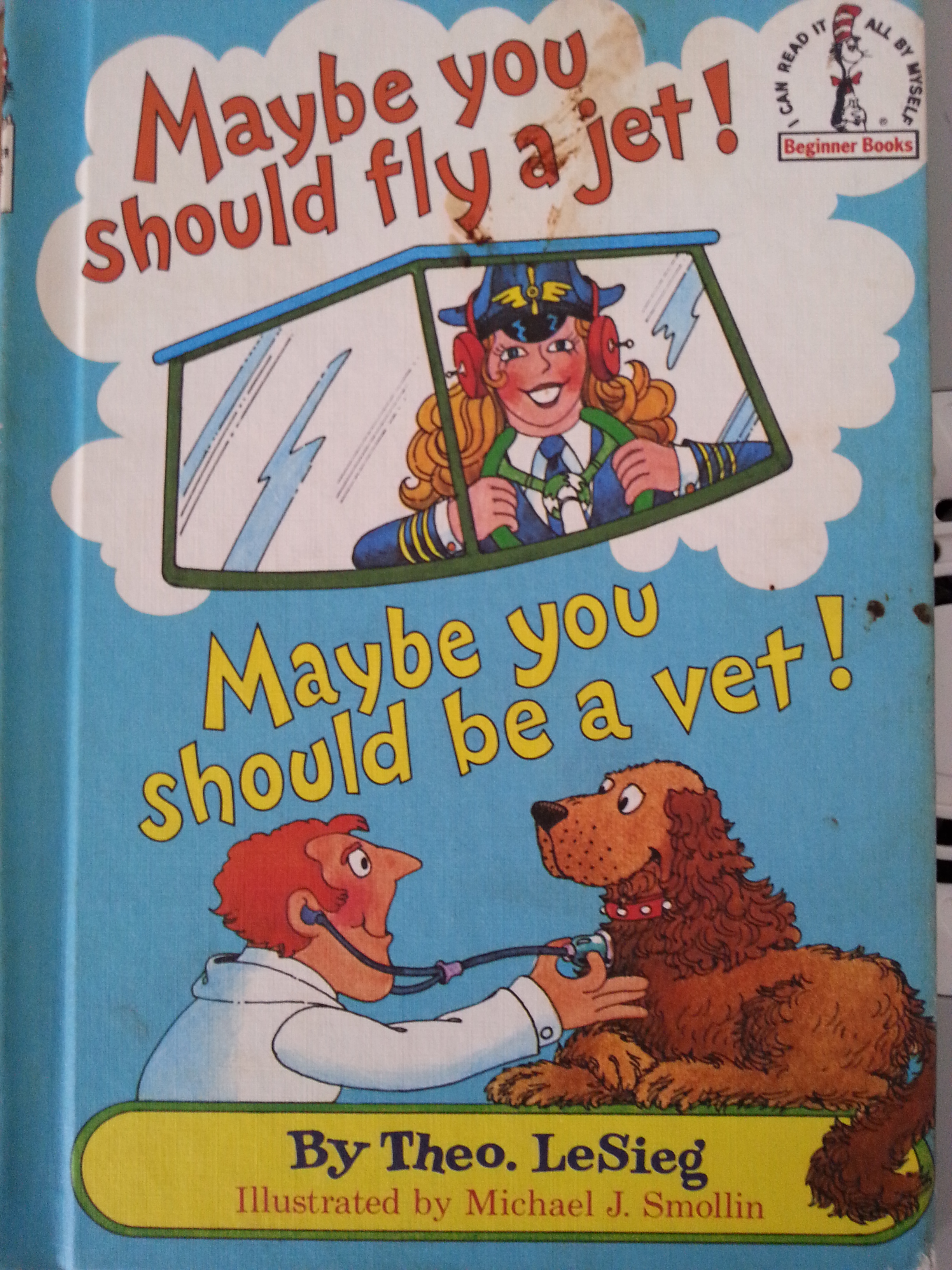
seuss fly a jet5. Maybe You Should Fly a Jet! Maybe You Should Be a Vet! My kids love this one, too. We first found it at the library. It’s good for introducing kids to a wide variety of professions and encourages them to think big and not let other people limit their dreams.

What are your favorite Dr. Seuss books?

Filed Under: 5 on Friday, books, Children & motherhood Tagged With: and to think that I saw it on mulberry street, dr. seuss, favorite children's books, maybe you should fly a jet maybe you should be a vet, mcelligott's pool, oh the places you'll go, read across america day, seussical the musical, the lorax

When simple is not the same as easy: Review of Notes from a Blue Bike by Tsh Oxenreider

February 26, 2014

After reading a book about simple living, my thoughts are anything but simple.

notes blue bikeIn her memoirish book Notes from a Blue Bike: The Art of Living Intentionally in a Chaotic World, Tsh Oxenreider lays out a blueprint for living a life with purpose. Because, honestly, aren’t most of us just drifting wherever the current takes us? (Disclaimer: I received a free copy of the book from Thomas Nelson through the BookLook Blogger Program in exchange for my review.)

Oxenreider and her family have lived overseas and in the States. They’ve homeschooled and public schooled. They’ve worked “regular” jobs and started their own business. They’ve traveled extensively. They’ve paid off debt. And though all of that is part of their journey to live a more simple and more intentional life, none of it was, or is, easy.

And that’s a major plus to this book. I’ve read other books on simple living that are more legalistic manifesto than guided invitation. Notes from a Blue Bike is the latter. Oxenreider doesn’t pretend that what has worked for their family will work for every family, but she encourages families to make a plan for intentional living. Because being intentional won’t just happen.

The book is divided into sections–food, work, education, travel, and entertainment–and in each one, the author draws from her family’s experiences and how they arrived at the current stage of their journey. After the food section, I was so inspired that I was ready to make sweeping changes to our family’s eating habits and food purchases. Now that I’m finished with the book, I’m taking seriously her encouragement to identify our family’s core values so we can make decisions based on those values.

I’ve dog-eared as many pages as not during my reading, and I’d encourage any who has dreamed of living a more intentional life but can’t figure out how to do it, to get a copy of this book. But be warned: it won’t be easy. Oxenreider confesses that living more slowly, more simply and more intentionally was easier when they lived overseas. American culture is not always conducive to this type of life and making changes will seem like swimming upstream at times.

That doesn’t scare me. It excites me.

Notes from a Blue Bike is in the top tier of the best nonfiction books I’ve read this year and would make my list for most influential books I’ve ever read.

You can read more about the author at her Website here or at The Art of Simple, a blog she directs on this topic.

Filed Under: books, Non-fiction, The Weekly Read Tagged With: booklook blogger program, intentional living, notes from a blue bike, simple living, thomas nelson, tsh oxenreider

  • « Previous Page
  • Page 1
  • …
  • Page 60
  • Page 61
  • Page 62
  • Page 63
  • Page 64
  • …
  • Page 132
  • Next Page »

Primary Sidebar

Photo by Rachel Lynn Photography

Welcome

Hi. I’m Lisa, and I’m glad you’re here. If we were meeting in real life, I’d offer you something to eat or drink while we sat on the porch letting the conversation wander as it does. That’s a little bit what this space is like. We talk about books and family and travel and food and running, whatever I might encounter in world. I’m looking for the beauty in the midst of it all, even the tough stuff. (You’ll find a lot of that here, too.) Thanks for stopping by. Stay as long as you like.

When I wrote something

June 2026
M T W T F S S
1234567
891011121314
15161718192021
22232425262728
2930  
« Jun    

Recent posts

  • Still Life
  • A final round-up for 2022: What our December was like
  • Endings and beginnings … plus soup: A November wrap-up
  • A magical month of ordinary days: October round-up
  • Stuck in a shallow creek
  • Short and sweet September: a monthly round-up
  • Wrapping the end of summer: Our monthly round-up

Join the conversation

  • A magical month of ordinary days: October round-up on Stuck in a shallow creek
  • Stuck in a shallow creek on This is 40
  • July was all about vacation (and getting back to ordinary days after)–a monthly roundup on One very long week

Footer

What I write about

Looking for something?

Disclosure

Lisa Bartelt is a participant in the Bluehost Affiliate Program.

Occasionally, I review books in exchange for a free copy. Opinions are my own and are not guaranteed positive simply due to the receipt of a free copy.

Copyright © 2026 · Genesis Framework · WordPress · Log in